
Why Visibility Is a Long Game: What Brands Can Learn From the NBA Playoffs
What playoff basketball can teach brands about earning attention, building trust, and staying visible when it matters most.
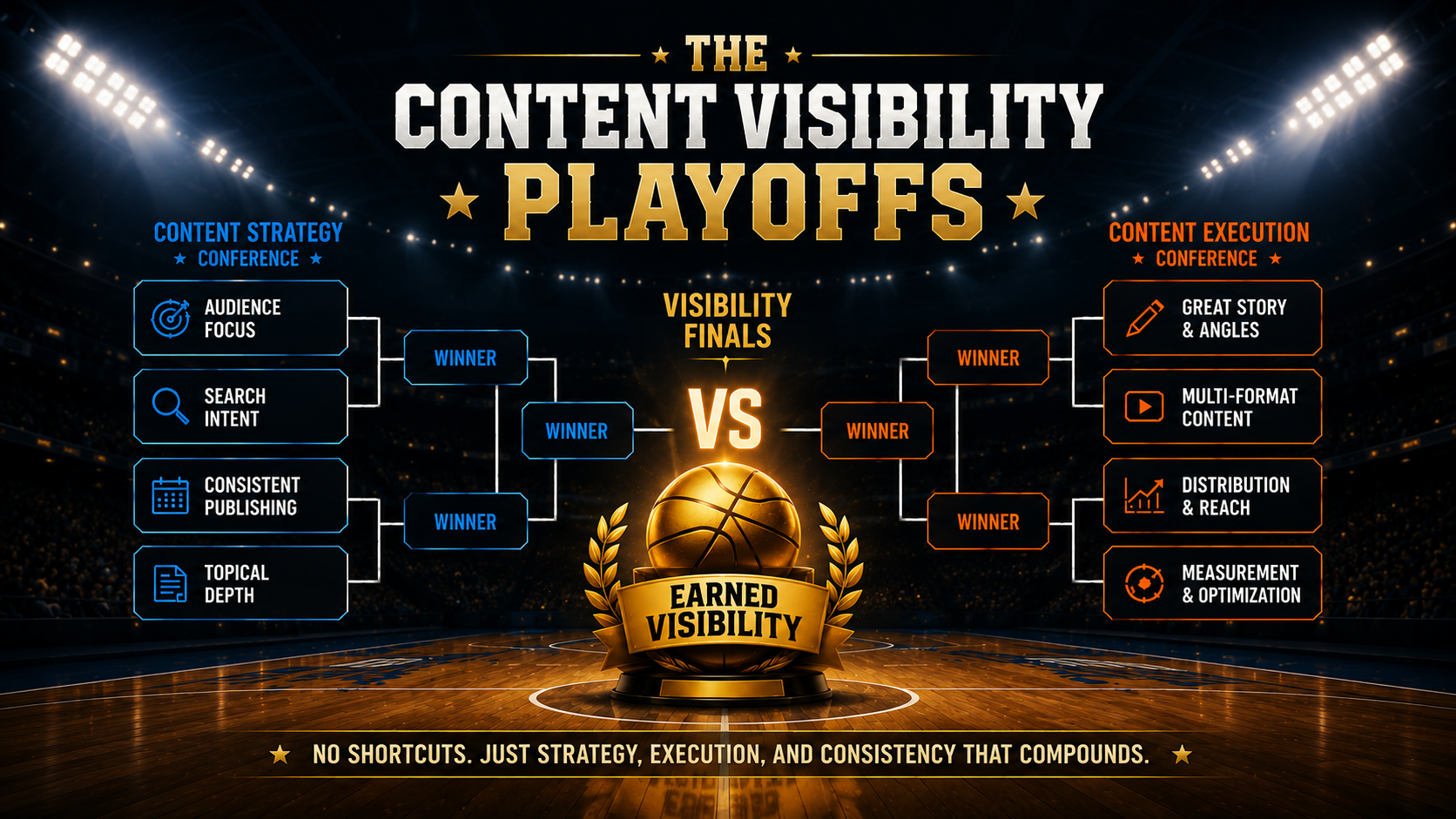
Brand visibility is not won on one big play. It is built through a system that earns attention over time.
Key Takeaways:
Brand visibility is built before the big moment, not during it. Like an NBA playoff team, brands need to put in the work in advance if they want to perform when attention matters.
Consistency matters more than one big campaign. Repeated, useful content helps audiences recognize what a brand stands for and why it should be trusted.
Search and AI discovery are making clarity more important. Brands need focused, credible content around the topics they want to be known for.
Every piece of content should have a role. Articles, videos, customer stories, sales assets, and refreshed content all support visibility in different ways.
The strongest brands do not wait for a launch, event, or sales push to start showing up. They build recognition and relevance over time, so they are already in the game when the big moment arrives.
The teams that make noise in the NBA playoffs rarely get there by accident. By the time the postseason begins, the real work has already happened: the habits, chemistry, trust, adjustments, and identity have been built over months. The playoffs simply reveal what has been developing all season.
As a Knicks fan, I know what it feels like when a team finally becomes visible again after years of frustration. For most of my life, the Knicks were a model of consistency, just not the kind you want. But when a team starts to build the right habits, identity, and belief, the entire conversation around them changes.
Brand visibility works the same way. A company does not become visible because it suddenly has something to announce. It becomes visible because it has spent time building recognition, trust, and relevance with the people it wants to reach.
The mistake many brands make is treating visibility like a campaign goal. They want attention for a launch, an event, a funding announcement, or a sales push, but visibility is not something you can switch on when the stakes get high. It is the result of a long-term content system built through consistent messaging, useful ideas, and repeated audience touchpoints.
The NBA playoffs are a useful reminder of that. The teams still playing in May are not just talented. They are prepared. They know who they are, understand their roles, trust their system, and have created momentum before the moment demands it.
For brands, the lesson is the same. Like an NBA playoff team, if you want to show up when it matters, you have to put in the work in advance.
Why Is Brand Visibility a Long Game?
Brand visibility is a long game because audiences need repeated exposure before they recognize, trust, and remember a company. A single campaign can create a moment of attention, but sustained visibility comes from consistent presence over time. Brands earn that presence by showing up with a clear point of view, useful ideas, and content that helps the audience before asking for anything in return.
As a Knicks fan, I have seen the other side of this too. When a team has been bad for years, one good run can create excitement, but lasting relevance takes more than a hot streak. It takes a system people can believe in.
Visibility is often misunderstood as awareness alone. Awareness means people know your name. Visibility means your brand is present, relevant, and credible in the moments when your audience is thinking about a problem you can solve.
A company can be known and still fail to earn trust. It can publish frequently and still not be remembered. It can run campaigns and still fail to build any real relationship with its market.
Strong visibility comes from accumulation. A useful article, a clear point of view, a helpful video, a smart LinkedIn post, and a consistent message repeated in different ways can all create familiarity over time. Familiarity can build trust. Trust can create preference. And preference is what gives a brand a better chance when the buying moment arrives.
None of that happens at the last minute.
What Can Brands Learn From the NBA Playoffs?
Brands can learn from the NBA playoffs that high-visibility moments are won through preparation, not improvisation. Playoff teams rely on systems, roles, habits, and trust that were built long before the postseason. Brands need the same kind of foundation if they want to earn attention during launches, sales pushes, events, or category shifts.
The NBA playoffs are built for pressure. Every possession is scrutinized. Every adjustment is important. Weaknesses get exposed quickly, and teams that looked strong in the regular season can suddenly look unprepared when the game slows down and the stakes rise.
Marketing has similar high-pressure moments. A product launch, a big industry event, a new market push, a rebrand, a funding announcement, or a major sales opportunity can all put a brand’s visibility to the test. In those moments, companies often want the market to pay attention immediately, but audiences are more likely to notice a brand they have seen before, heard from before, and already associate with useful thinking.
The visible moment depends on the invisible work behind it. A playoff team cannot build chemistry in Game 7, and a brand cannot build trust the week before a launch. The visible moment is only the surface. The real advantage comes from what has already been built underneath it.
Why Consistency Beats the Occasional Big Swing
Consistency matters more than occasional brilliance because audiences need repeated signals to understand what a brand stands for. One strong article, video, or campaign can help, but it rarely creates durable visibility on its own. A consistent content strategy gives the audience multiple chances to see, understand, and remember the brand.
Many companies overvalue the big swing. They want the breakthrough campaign, the viral post, the perfect thought leadership piece, or the launch video that changes how the market sees them. Those moments can be valuable, but they are unreliable as a strategy.
Visibility is usually built through smaller, steadier moves. A regular publishing rhythm, a clear editorial lane, a point of view that shows up across channels, and content that keeps solving real audience problems will usually do more for visibility than one isolated win.
As search changes, consistency is becoming harder to separate from visibility. Traditional search engine optimization, or SEO, still matters, but brands are also writing for answer engines, AI summaries, and search experiences that pull from multiple sources to decide which ideas are worth surfacing.
Google’s Search Central guidance still emphasizes helpful, reliable, people-first content, and its AI features documentation explains how AI experiences are now part of how users discover information in Search.
In that environment, visibility is not just about ranking for one keyword. It is about becoming a clear, credible source on the topics your audience cares about. If your content is inconsistent, thin, or scattered across too many disconnected ideas, it becomes harder for people and answer engines to understand what your brand should be known for.
Consistency does not mean repetition without thought. It means discipline. The strongest brands do not reinvent themselves every week. They keep returning to the ideas they want to own, while finding new ways to make those ideas useful.
Over time, the market starts to connect the brand with a problem, a belief, or a category. Fans remember the big shot, but the big shot is rarely the whole story. It usually comes after months of reps, trust, spacing, and execution. In content, consistent brands are easier to remember because the audience knows what to expect.
Every Piece of Content Needs a Role
Each piece of content should know its role by serving a clear purpose in the larger strategy. Some content builds awareness, some creates trust, some educates buyers, and some supports sales conversations. When every asset has a job, the content system becomes stronger than any single piece.
Not every player on a playoff team does the same thing. Some score, some defend, some control tempo, some create space, and some change the energy of the game in short bursts. A strong content strategy works the same way, with different types of assets doing different jobs.
A thought leadership article might help a brand define its point of view. A guide might help the audience understand a problem. A customer story might build proof, while a short video might make an idea easier to share. A sales enablement piece might help a buyer explain the value internally, and a refreshed blog post might protect search visibility while keeping existing content useful.
The problem starts when every piece of content is expected to do everything. When that happens, content gets bloated, unfocused, and less useful. A better approach is to assign roles before the work begins.
Before creating a piece of content, ask what audience moment it is for, what question it answers, what the reader should understand after engaging with it, and where it fits in the larger buyer journey. The answer does not need to be complicated, but it does need to be clear.
Role clarity makes content sharper. It also makes the whole system easier to manage.
Why Do Brands Need to Repeat Their Strongest Ideas?
Brands need to repeat their strongest ideas because audiences do not absorb a message the first time they see it. Internal teams often get tired of a message long before the market has fully registered it. Repetition, when done with variation and purpose, helps a brand become recognizable and easier to associate with a clear point of view.
Many companies confuse repetition with redundancy. They assume that if they have said something once, the audience has heard it, but most people are not paying that much attention. They are busy, distracted, and seeing messages from competitors, platforms, analysts, influencers, and internal stakeholders.
A brand’s job is not to say something once. It is to make the right ideas easier to find, understand, and remember. That requires repetition across channels, formats, and audience moments.
The key is to repeat the idea, not the exact same execution. A single strategic theme can become a blog post, a short video, a webinar segment, a sales narrative, a social series, a customer story, and a visual explainer. The core idea stays consistent, but the format changes so the audience gets multiple entry points.
This is where many content programs underperform. They keep chasing new topics instead of building depth around the ideas that matter most. Playoff teams return to what works, and brands should do the same, not mechanically or lazily, but with enough discipline to become known for something.
A Launch Is a Moment. Visibility Is the System.
A launch strategy is built around a specific moment, while a visibility strategy builds recognition before, during, and after that moment. Launches can create urgency, but visibility creates context. Brands need both, but a launch performs better when the audience already understands who the brand is, what it believes, and why its message matters.
In the playoffs, you find out pretty quickly whether a team’s regular-season identity holds up under pressure. The same thing happens in marketing. A launch, sales push, or industry event will test whether the market already understands what your brand stands for.
Launch strategies tend to focus on a short window: the announcement, the campaign, the event, the press push, or the sales motion. Those are important moments, but they work harder when they are supported by a longer runway of content that has already educated the audience and made the brand familiar.
A visibility strategy asks a broader question: what does the market need to understand before the big moment arrives? That shift changes the work. Instead of starting with the announcement, the brand starts with the audience, their assumptions, their pain points, their language, and the ideas they need to hear repeatedly before they are ready to act.
When those questions guide the content, the launch has more ground to stand on. The audience is not meeting the brand cold. They have seen the thinking, understand the context, recognize the problem, and are more prepared to care.
Building visibility early gives the launch more ground to stand on. A launch can generate attention, but a visibility strategy makes that attention more likely to turn into trust.
How to Build Visibility Before the Big Moment
Brands can build visibility before they need it by creating a consistent content system around the ideas, problems, and audience moments they want to own. That system should include editorial content, video storytelling, thought leadership, sales support, and content refreshes. The goal is to stay useful and recognizable between campaigns, not only during them.
The work starts with focus. Most brands do not need more random content. They need a clearer system built around the three to five ideas they want to be known for. Those ideas should connect to audience pain points, market shifts, business priorities, and the company’s real expertise.
Once those ideas are clear, the content can be built in layers. A foundational article can explain the thinking, while a short video can make the idea easier to understand and share. A customer story can add proof, a sales asset can support buyer conversations, and a refreshed blog post can protect search visibility while keeping existing content useful.
This is another place where the playoff comparison holds up. Teams do not build a winning identity from one game plan. They build it through repeated execution, clear roles, smart adjustments, and trust in the system. Brands need the same kind of structure if they want visibility to compound instead of disappearing after one campaign.
A good visibility strategy should answer a few questions: what ideas do we want to own, what audience questions do we need to answer, what formats will help those ideas travel, and what existing content can be updated instead of replaced? The more clearly a brand can answer those questions, the easier it becomes to build a content system that keeps working over time.
This approach turns content into infrastructure. Instead of creating one off assets, the brand builds a body of work that compounds. Each piece supports the next, each format gives the audience another way in, and each repetition strengthens the association between the brand and the idea.
Final Thoughts
Brand visibility is not won in the final minutes. By the time the market is paying attention, the strongest brands have usually been doing the work for months or years. They have clarified their message, shown up consistently, created useful content, repeated their strongest ideas, and built trust before asking for action.
The NBA playoffs make that lesson easy to see. The postseason may be the visible stage, but the advantage comes from preparation. The teams that last are rarely the ones relying on one big shot or one good night. They are the ones with a system that holds up when the pressure rises.
For brands, the same principle applies. The companies that win attention are not always the loudest. They are the ones that have made themselves relevant before the audience has an immediate need, earning a place in the conversation through consistency, clarity, and value.
At Underground Group, we see visibility as the result of a connected content system. Editorial strategy, video storytelling, content refreshes, thought leadership, and sales enablement all have a role to play. The goal is not to publish for the sake of publishing, but to build a presence your audience recognizes, trusts, and remembers.
Because when the big moment arrives, you want to already be in the game.
Ready to see where your brand is visible, where it is missing, and what content can do the most work next? Start with a free Underground Group content workshop.
FAQs
What is brand visibility?
Brand visibility is how often and how clearly your audience encounters your brand in the moments when they are thinking about a problem you can help solve. It goes beyond name recognition. A visible brand is not only known; it is relevant, credible, and easy to connect with a specific topic, challenge, or category.
Why does brand visibility take time to build?
Brand visibility takes time because people rarely remember or trust a company after one interaction. Recognition builds through repeated exposure to useful ideas, clear messaging, and consistent content across the channels where your audience spends time. The brands that stay top of mind are usually the ones that show up before they need attention.
How can content strategy improve brand visibility?
Content strategy improves brand visibility by giving every piece of content a clear purpose. Instead of publishing disconnected articles, videos, social posts, and sales assets, a strong content strategy connects them around the topics a brand wants to own. That helps the audience understand what the brand stands for and gives search engines, AI tools, and buyers clearer signals about the brand’s expertise.
What is the difference between brand awareness and brand visibility?
Brand awareness means people know your company exists. Brand visibility means your company shows up with relevance and credibility when your audience is actively learning, comparing, or deciding. Awareness can create recognition, but visibility helps turn that recognition into trust, preference, and opportunity.